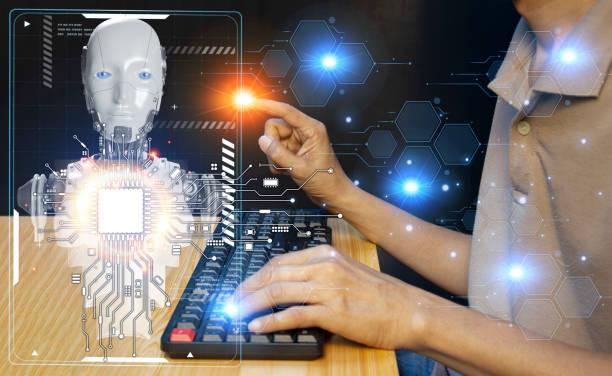
I still remember the first time I used an AI tool properly. I thought it would just correct grammar or maybe suggest a better sentence. Instead, it wrote half the draft before I even finished my coffee. That was the moment I realized… okay, this isn’t just another tech trend. This is something bigger.
Artificial Intelligence isn’t just sitting quietly inside tech companies anymore. It’s in our phones, our offices, our shopping apps, even inside hospital systems. And whether people admit it or not, it’s already changing how we work and live in ways that feel both exciting and slightly uncomfortable.
Work Isn’t What It Used to Be
Let’s be honest. A lot of jobs today don’t look like they did five years ago. Marketing teams use AI to write ads. Designers use AI to generate ideas. Coders use AI to debug faster. Even HR teams use AI to filter resumes.
Some people are scared of this. I get it. There’s this constant Twitter (or X, whatever we call it now) debate about “AI taking jobs.” And yes, some repetitive roles are definitely shrinking. Data entry, basic support chats, simple content writing. But at the same time, new roles are popping up. Prompt engineers, AI trainers, automation specialists. These didn’t even exist properly a few years back.
It reminds me of when calculators became common. People thought math skills would disappear. They didn’t. The focus just shifted from manual calculation to problem solving.
AI is doing something similar. It’s removing boring tasks so humans can focus on strategy, creativity, and decision making. At least that’s the ideal version. Reality is still messy.
We’re Becoming More Productive… But Also More Dependent
One weird thing I’ve noticed about myself is this. If AI tools are slow for even a few minutes, I feel stuck. Like I forgot how to think on my own. That’s slightly scary.
Companies love AI because it increases productivity. Reports show businesses using AI automation can reduce operational costs by up to 30% in some sectors. That’s not small. Customer service bots handle thousands of queries at once. AI analytics predict market trends before humans even notice patterns.
But dependence is growing too. When algorithms decide what content we see, what routes we take, what products we buy, our choices are subtly influenced. We think we’re deciding freely, but there’s always a recommendation engine nudging us.
Sometimes I wonder if we are becoming lazy thinkers. Or maybe just efficient thinkers. Hard to say.
AI Is Personalizing Everything
Have you noticed how Netflix somehow knows exactly what you might want to watch on a random Tuesday night? Or how shopping apps show you shoes you were thinking about but never searched?
That’s AI working silently in the background. It analyzes behavior, clicks, pauses, scroll speed even. Personalization has become so normal that when something isn’t tailored to us, it feels annoying.
From a business point of view, personalization increases engagement massively. People are more likely to buy when they feel understood. From a human point of view, though, it creates echo chambers. We see what we already like. We hear what matches our opinions.
It’s comfortable, but maybe a little dangerous.
Healthcare and AI Is Honestly Mind-Blowing
One area where I genuinely feel positive is healthcare. AI can now detect certain diseases from scans faster than human doctors. Some AI systems analyze thousands of medical images in minutes. That kind of speed can save lives.
There’s also AI-powered drug discovery. What used to take years in research labs is now being accelerated with machine learning models predicting chemical reactions. That’s huge.
Of course, it’s not perfect. Algorithms can be biased if trained on incomplete data. But overall, the potential impact on life expectancy and diagnosis accuracy is massive.
This is where AI feels less like a threat and more like a helper.
Remote Work and AI Go Hand in Hand
The rise of remote work after the pandemic mixed perfectly with AI growth. Collaboration tools now use AI to summarize meetings, transcribe conversations, even suggest action points automatically.
I used to spend 30 minutes writing meeting notes. Now it’s done in seconds. That may sound small, but multiply that across teams and months. The time savings become serious.
Companies are also using AI to monitor performance remotely, which is slightly creepy if I’m being honest. Productivity tracking software can analyze typing speed, idle time, task completion rates. That crosses into surveillance territory sometimes.
So yeah, AI is helping remote work… but it’s also reshaping trust between employers and employees.
Creativity Isn’t Dead, It’s Just Changing
A common argument online is that AI is killing creativity. Artists complain. Writers complain. Designers complain. And I understand the frustration.
But here’s my slightly unpopular opinion. AI doesn’t kill creativity. It forces humans to level up.
When basic design can be generated instantly, original ideas become more valuable. When generic blog posts can be written by machines, personal storytelling stands out more.
The bar is rising. Lazy creativity won’t survive. Thoughtful creativity might thrive.
I’ve seen small creators use AI tools to compete with bigger brands because now production costs are lower. That’s kind of empowering.
Daily Life Is Becoming Invisible Tech
Smart homes adjust temperature automatically. Voice assistants control lights. Maps predict traffic before you leave. Spam filters block emails you never see.
Most AI impact is invisible. It’s not dramatic robots walking around. It’s silent systems optimizing daily routines.
And that’s probably why the change feels gradual but deep. One day you realize you haven’t memorized phone numbers in years. Or that you trust GPS more than your own sense of direction.
AI is slowly becoming infrastructure.
The Real Change Is Psychological
More than technical shifts, AI is changing how we think about intelligence itself. We used to believe intelligence was uniquely human. Now machines can write poems, compose music, even simulate conversation.
That challenges identity a little. If thinking isn’t exclusively ours, what makes us special?
Maybe it’s emotion. Maybe it’s ethics. Maybe it’s consciousness. Or maybe the line isn’t as clear as we assumed.
That’s why AI feels different from past tech revolutions. It doesn’t just change tools. It changes self-perception.
So Why Is Artificial Intelligence Changing the Way We Work and Live?
Because it sits at the center of decision making. It influences productivity, creativity, healthcare, communication, and even relationships. It reduces friction. It speeds up processes. It predicts behavior.
And humans love convenience.
We adopt what makes life easier. AI makes almost everything faster and smoother, even if we don’t fully understand how.
The bigger question isn’t whether AI will continue changing our lives. It already is. The real question is how we manage that change without losing control, privacy, or human connection.
Honestly, I don’t have a perfect answer. I just know that ignoring AI right now feels like ignoring the internet in 1999.
And we all know how that turned out.