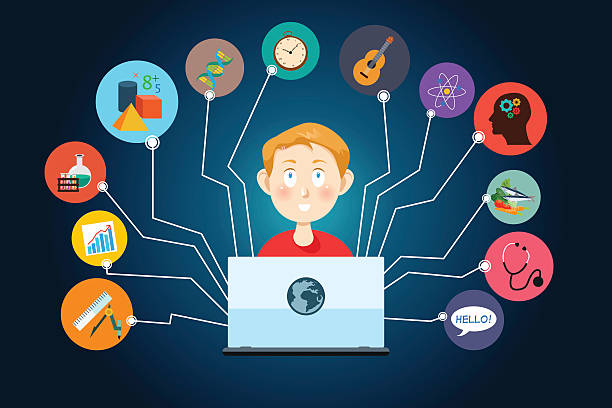
I still remember when “technology in class” meant one dusty computer in the corner that nobody was allowed to touch. Now kids attend school on tablets that cost more than my first phone. Things changed fast. Almost too fast honestly.
When people ask, What Role Does Technology Play in Education Today?, they usually expect a polished answer about digital transformation and innovation. But the real answer is messy. Complicated. Sometimes exciting, sometimes exhausting.
From Blackboard to Smartboard
Education used to move at a slow, predictable pace. Chalk, notebooks, textbooks that were outdated the moment they got printed. Now? Updates happen like phone software patches. Constantly.
Smartboards replaced blackboards. Online assignments replaced paper submissions. Even attendance is digital in many schools. A report I came across last year mentioned that over 70% of schools globally now use some kind of learning management system. That’s huge if you think about it.
But here’s the thing. Just adding screens doesn’t magically improve learning. I’ve seen classrooms where smartboards are basically used like expensive projectors. Same old teaching, new shiny tool.
Technology only works when teachers actually adapt to it. Otherwise it’s just decoration.
Access to Information Is Almost Too Easy
When I was in school, if we had a doubt, we either waited for the teacher or searched through heavy encyclopedias. Now students just Google it. Or ask AI tools. Or watch a 5-minute YouTube explanation.
Information is no longer the problem. Filtering it is.
Students today don’t struggle with “finding” answers. They struggle with deciding which answer is correct. There’s so much content online that it can be overwhelming. I’ve seen students copy from the first website they see without checking if it’s reliable.
So in a weird way, technology shifted the skill requirement. It’s not about memorizing anymore. It’s about critical thinking. Evaluating sources. Understanding context.
That’s a big shift.
Online Learning Changed Everything (Especially After 2020)
We can’t talk about What Role Does Technology Play in Education Today? without mentioning online classes. The pandemic forced schools to go digital overnight. Some handled it well. Some… not so much.
Zoom classes became normal. Parents became part-time IT support. Students discovered they could mute teachers and pretend the internet was “unstable.” Let’s be honest, that happened everywhere.
But beyond the jokes, online learning made education more flexible. Students in remote areas could attend sessions that were previously impossible. Recorded lectures allowed revision anytime. Platforms like Coursera and Udemy made skill learning affordable.
At the same time, screen fatigue is real. Attention spans are shrinking. I’ve personally felt my focus drop after hours on a laptop. Imagine being 14 and doing math through a screen all day.
So yes, technology made education accessible. But it also made distraction one click away.
Personalized Learning Is Finally Becoming Real
This part actually excites me. Technology allows adaptive learning systems. Apps that track student performance and adjust difficulty levels automatically.
Think of it like Netflix recommendations but for math problems. If you’re weak in algebra, you get more practice there. If you’re good at science, the system pushes advanced content.
Some studies show personalized learning tools can improve student performance by around 20–30% in certain subjects. That’s not small.
In traditional classrooms, one teacher manages 30 or 40 students. It’s impossible to tailor everything manually. Technology helps bridge that gap.
Though I’ll admit, it still can’t replace human encouragement. A software can show you mistakes. It can’t motivate you the way a passionate teacher can.
Teachers Are No Longer Just Information Providers
This is a subtle but important change. Earlier, teachers were the main source of knowledge. Now students often come to class already having watched explainer videos.
So what’s the teacher’s role now?
More like a guide. A mentor. Someone who helps connect dots.
I’ve seen educators on social media talk about this shift. Many say their job feels more like facilitating discussions rather than lecturing. That’s actually healthier for learning.
But it also means teachers need training. Not every educator is comfortable with tech. Expecting them to instantly become digital experts is unfair.
Digital Divide Is Still a Big Problem
We talk a lot about innovation, but not enough about inequality.
Not every student has high-speed internet. Not every family can afford a laptop for each child. In some regions, students still share devices or rely on mobile data.
So while technology expands education for some, it widens the gap for others.
I read somewhere that millions of students worldwide still lack reliable internet access. That statistic doesn’t get viral on Instagram, but it matters.
Education technology only works when access is universal. Otherwise it creates two systems. One advanced, one left behind.
AI and Automation Are Entering Classrooms
Now we’re seeing AI tools helping with homework, grading, even generating lesson plans. That’s both impressive and slightly scary.
Students can get instant explanations. Teachers can automate repetitive tasks. Schools can analyze performance data in real time.
But there’s also the cheating debate. If AI writes essays, what happens to learning? Schools are still figuring this out.
Honestly, I think banning technology never works. Teaching responsible use makes more sense.
Technology in education isn’t going away. It’s only going deeper.
So, What Role Does Technology Play in Education Today?
It plays multiple roles at once.
It’s a tool for access. A platform for creativity. A shortcut sometimes. A distraction often. A bridge between students and global knowledge.
But it’s not the hero of the story.
The real role of technology in education today is support. It supports teachers. It supports students. It supports flexibility.
When used well, it enhances learning. When used poorly, it complicates it.
I don’t think classrooms will ever go fully digital. Nor should they. Human interaction still matters too much.
Maybe the future isn’t about replacing traditional education. It’s about blending it intelligently with technology.
And we’re still figuring that balance out. Probably will be for a while.