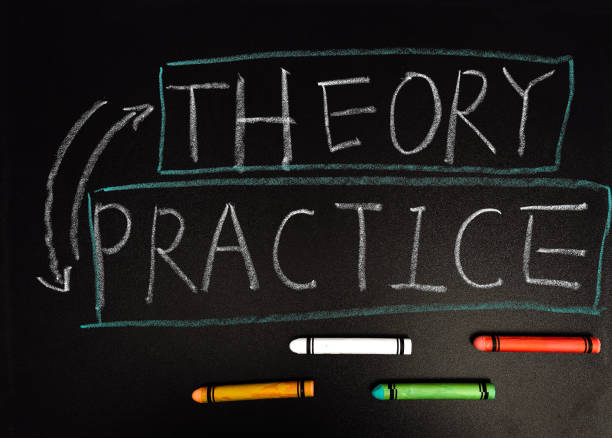
I’m not saying classroom theory is useless. I survived on theory for years. Notes, highlighters, underlining important lines like my life depended on it. But the real shock hit me when I had to actually do something with all that knowledge. That’s when I realized something kind of uncomfortable — knowing is not the same as doing.
School teaches us formulas. Life asks us to apply them without giving options A, B, C, and D.
Theory Feels Safe, Practical Feels Real
Classroom theory is comfortable. You sit, you listen, you write, you memorize. It’s structured. Predictable. If you study enough, you score marks. Simple system.
But practical learning? That’s messy.
I remember studying marketing in college. We learned about consumer behavior, target audience, positioning strategies. I could define everything perfectly in exams. But when I tried helping a friend promote his small clothing brand online, nothing worked the way the textbook said it would. Algorithms didn’t care about my definitions. Customers didn’t behave like neat case studies.
That’s when it clicked. Theory gives you the map. Practical experience throws you into the traffic.
Memory Fades, Experience Stays
There’s actually research showing people remember only a small percentage of what they read or hear, but they retain much more of what they actively do. I don’t remember half of my lecture slides from second year. But I still remember the embarrassment of messing up my first presentation in front of real clients. That mistake taught me more about communication than ten chapters ever did.
It’s like learning to swim. You can read 200 pages about floating techniques. But until you jump into water, you’re just dry and informed.
And sometimes still scared.
Employers Don’t Just Want Degrees Anymore
If you scroll LinkedIn for five minutes, you’ll see the same thing repeated. “We are looking for candidates with hands-on experience.” Internships. Projects. Portfolio. Real work.
Companies have realized something students are slowly understanding too. A degree proves you attended classes. Practical learning proves you can handle reality.
There’s a stat floating around in HR circles that a large percentage of employers feel graduates lack job-ready skills despite having good grades. It sounds harsh, but it’s not shocking. Our education system still focuses heavily on theory-based evaluation.
Marks look good on paper. Skills look good in action.
Confidence Comes From Doing, Not Just Knowing
There’s a different kind of confidence that practical learning builds. It’s not the “I read about this” confidence. It’s the “I’ve handled this before” confidence.
When you’ve actually solved a real problem, even a small one, your brain trusts you more next time. It’s psychological. Experience reduces fear.
I’ve noticed this in myself. The first time I had to speak in front of a group, my hands were shaking. After doing it repeatedly, it became normal. No book could have given me that comfort.
Theory prepares you mentally. Practice prepares you emotionally.
Mistakes Become Teachers Instead of Failures
Classroom theory often punishes mistakes with lower grades. So students start fearing errors. But in practical learning, mistakes are part of the process.
When you build something, launch something, cook something, design something — it won’t be perfect the first time. And that’s okay. In fact, it’s necessary.
Social media is full of startup founders sharing stories about failed prototypes or early disasters. Those experiences shape their success later. Imagine if they had only read about entrepreneurship without trying.
Failure in theory hurts your GPA. Failure in practice sharpens your judgment.
Practical Learning Connects Knowledge to Reality
Sometimes theory feels disconnected from real life. You study economics, but you don’t understand inflation until grocery prices suddenly increase. You study coding, but you don’t understand debugging until your program refuses to run at 2 AM.
Application creates connection.
When students work on real-world projects, internships, simulations, labs, they see why concepts exist. Suddenly formulas make sense. Suddenly definitions feel useful.
Without application, knowledge can feel like decoration. With application, it becomes a tool.
The World Changes Faster Than Textbooks
This is something we don’t talk about enough. Textbooks get outdated. Industries evolve quickly. Technology changes monthly. If someone relies only on classroom theory, they risk learning yesterday’s version of today’s world.
Practical learning forces adaptability.
When you work on real problems, you’re exposed to current tools, current challenges, current expectations. That keeps you relevant. I’ve seen people who never had perfect grades but stayed curious and kept experimenting. They’re doing surprisingly well now.
Experience updates itself. Theory waits for new editions.
It Builds Soft Skills Without Announcing It
Practical learning doesn’t just teach technical skills. It builds communication, teamwork, patience, time management. And no one writes “today we will learn patience” on the board.
When you collaborate on projects, deal with deadlines, handle disagreements, you develop real-world intelligence. Emotional intelligence.
Honestly, some of the most valuable lessons I learned didn’t come from lectures. They came from group work that went wrong.
Annoying at that time. Useful later.
But Theory Still Matters
I’m not saying throw away classrooms. That would be extreme. Theory gives foundation. It gives structure. Without understanding basics, practical work can become random guessing.
Think of theory as the blueprint. Practical learning is construction. You need both. But if you only collect blueprints and never build, what’s the point?
Balance is key. Unfortunately, many systems still lean too heavily toward theory.
Education Should Feel Like Preparation, Not Just Information
At the end of the day, learning should prepare people for life and work. Not just exams.
Practical exposure reduces the shock students feel when they enter professional environments. It reduces the gap between “student mode” and “real world mode.” And that gap is real. Almost everyone talks about it once they graduate.
Maybe the future of education lies in blending both properly. Less memorizing for marks. More applying for understanding.
Because in reality, nobody hands you a question paper with clear instructions.
You just face situations. And you respond based on what you’ve actually practiced.
That’s why practical learning feels more important. Not because theory is bad. But because life tests application, not definitions.